
Author
Krista
Date
08.25.26
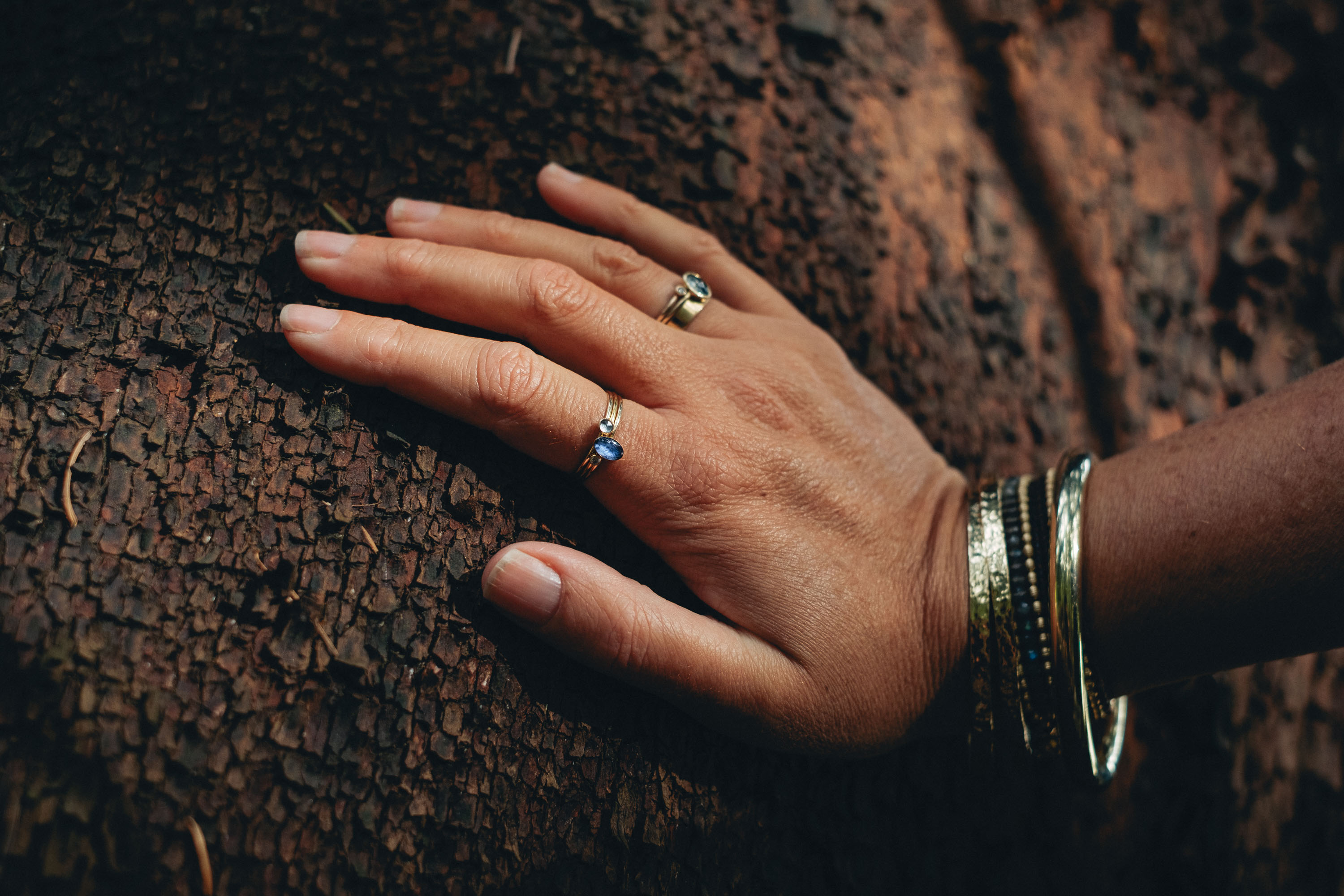
Forij wasn't something I set out to create. In many ways, it feels like something I've been walking toward for years without realizing it.
I started as Birch Artisan Studio over twelve years ago, and I thought I was making jewellery. Turns out it was something else altogether. There is a strange feeling that comes when you realize you have outgrown something you love. Birch carried me as far as it could, it’s done everything it intended to do, but what it has become has now outgrown the vessel. That is how Forij was born.
When I started working with botanicals, the flowers weren't simply a new material to work with. They became a different way of seeing.
I wanted people to slow down long enough to really look. To notice the tiny details that make one flower different from another, the subtle characteristics that are easy to miss when we only glance in passing. The more I worked with botanicals, the more I found myself wondering what would happen if we paid that same kind of attention to the rest of life. We spend so much time searching for the extraordinary that it's easy to overlook the quiet things that shape us every day.
It was never really about the flowers themselves.
It was about remembering that significance is often found in the smallest details, and that every living thing has something uniquely its own to offer if we're willing to notice it. I wanted each flower to become more than something beautiful. I wanted it to help someone recognize a quality within themselves or someone they loved, because sometimes it's easier to see those things reflected in the living world before we recognize them in ourselves.
For a while, I thought that was what the work was about.
Then people began sharing their stories.
Whenever someone told me why they had chosen a piece, they almost never started with the flower. They talked about a grandmother who grew lilacs, a wedding bouquet, a favourite trail, a child, a parent, a friendship, or someone they had lost. Again and again, I found myself listening to stories about the people, places, and moments that had shaped their lives.
It slowly became clear that the flowers had never been the reason. They had become witnesses, quietly standing beside people through the moments that mattered most, carrying the memory of having been there long after the moment itself had passed. Every piece that left the studio carried something far greater than the botanical set inside it. It carried celebration, grief, hope, gratitude, reconciliation, belonging, and stories that were sometimes too tender to put into words.
Those stories stayed with me. Why do we instinctively reach for the living world when life feels most significant? Why do we preserve a wedding bouquet but not the table it sat on? Why do we plant a tree to mark a new beginning, leave flowers for someone we've lost, or find ourselves returning to the same beach, forest, or mountain when we need perspective?
We do these things so naturally that we rarely stop to ask why. The more I sat with those questions, the more I realized they weren't really about flowers at all. They were about relationship.
Long before we measured the world or divided it into neat categories, we understood life through relationship. The land wasn't simply where we lived. It shaped us. The seasons guided the rhythms of our lives. Trees, rivers, birds, flowers, and stones weren't separate from us. They were companions, teachers, witnesses, and part of the same living community.
Somewhere along the way, we began seeing nature as something outside ourselves instead of recognizing that we belong to it. Yet some part of us never forgot. We still seek out forests when life feels loud. We walk beside the ocean when we need perspective. We fill our homes with plants. We celebrate with flowers and grieve with them too. We still turn toward the living world in our most meaningful moments, even if we've forgotten why.
The more I observed nature, the more I realized that the same pattern exists everywhere I look. Nothing exists by itself. Forests thrive because of relationship. Meadows flourish because every species has its place. Rivers shape the land while the land shapes the rivers in return. Every living thing influences something else while being shaped itself.
Nature has never stopped showing us how life works. The question is whether we've stopped paying attention.
Those questions eventually became Forij.
At its heart, Forij is an exploration of connection. Connection to the earth that sustains us, certainly, but even more than that, connection to ourselves, to one another, to the memories that have shaped us, and to the lives we're still creating. I don't see those as separate things. The more I pay attention to the natural world, the more they seem to be part of the same conversation.
Nature has always been one of our oldest teachers. It shows us what resilience looks like, how communities thrive through reciprocity, how every season has its purpose, and how endings become nourishment for something new. Those lessons don't belong only to forests, rivers, flowers, or birds. They belong to us too.
The botanicals remain at the heart of Forij because they were where I first learned to notice, but they continue to do something else as well. They celebrate the moments that make a life. The people we love. The places we return to. The memories we carry. The qualities we recognize in ourselves and in each other. Every piece becomes a reminder that what matters most is rarely separate from the living world that witnessed it.
The collections, the journals, the observations, and the conversations all grow from the same curiosity. What happens when we begin paying attention again? What might we remember about ourselves if we learned to see the world the way nature has always invited us to?
I don't know if Forij will ever answer those questions completely.
I hope it doesn't.
I hope it remains a place where we continue asking them together, celebrating the beauty of life as it unfolds, and rediscovering a relationship that has been quietly waiting for us all along.
Related reading

Stay close
Subscribe to get new articles on new work and the stories that shape them.